English
 Italiano
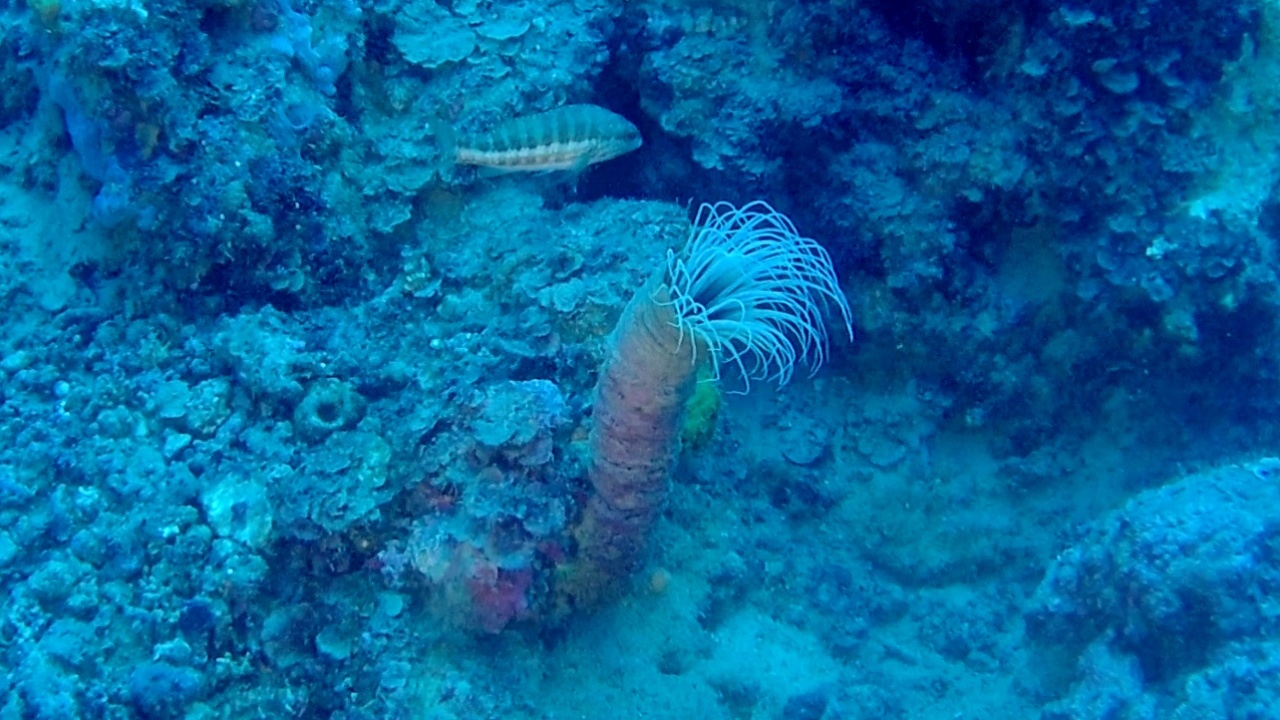
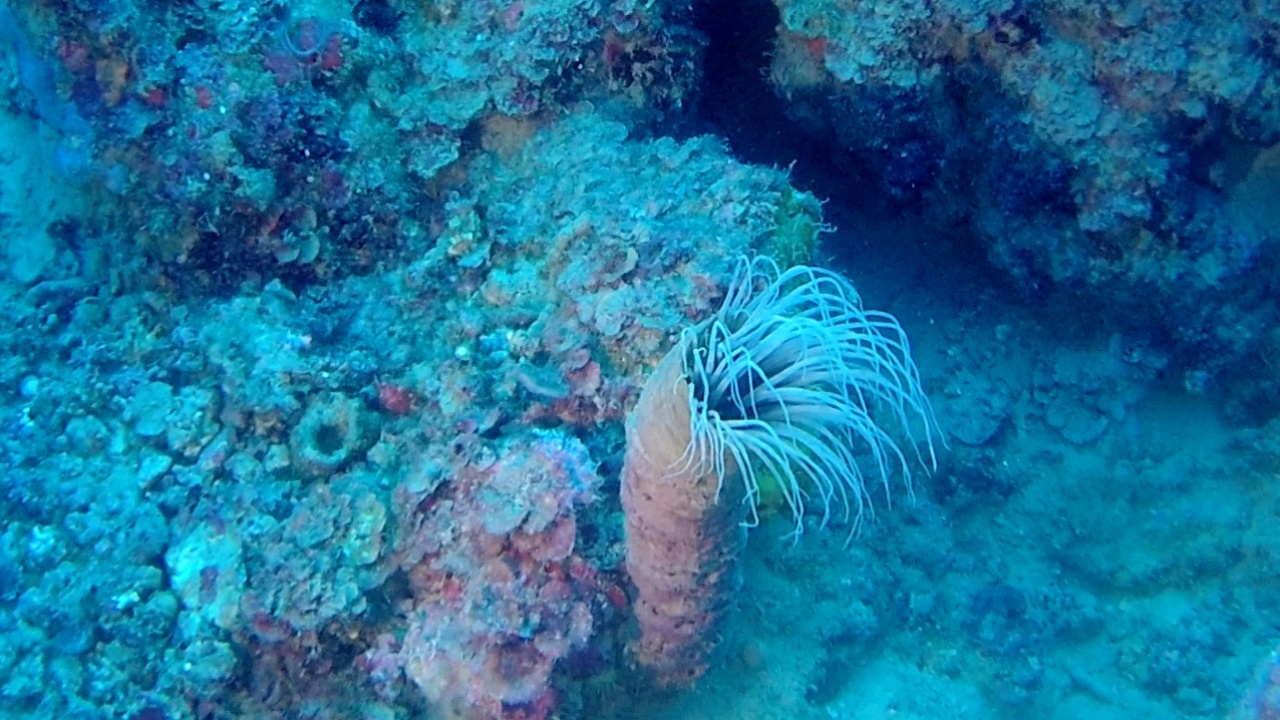
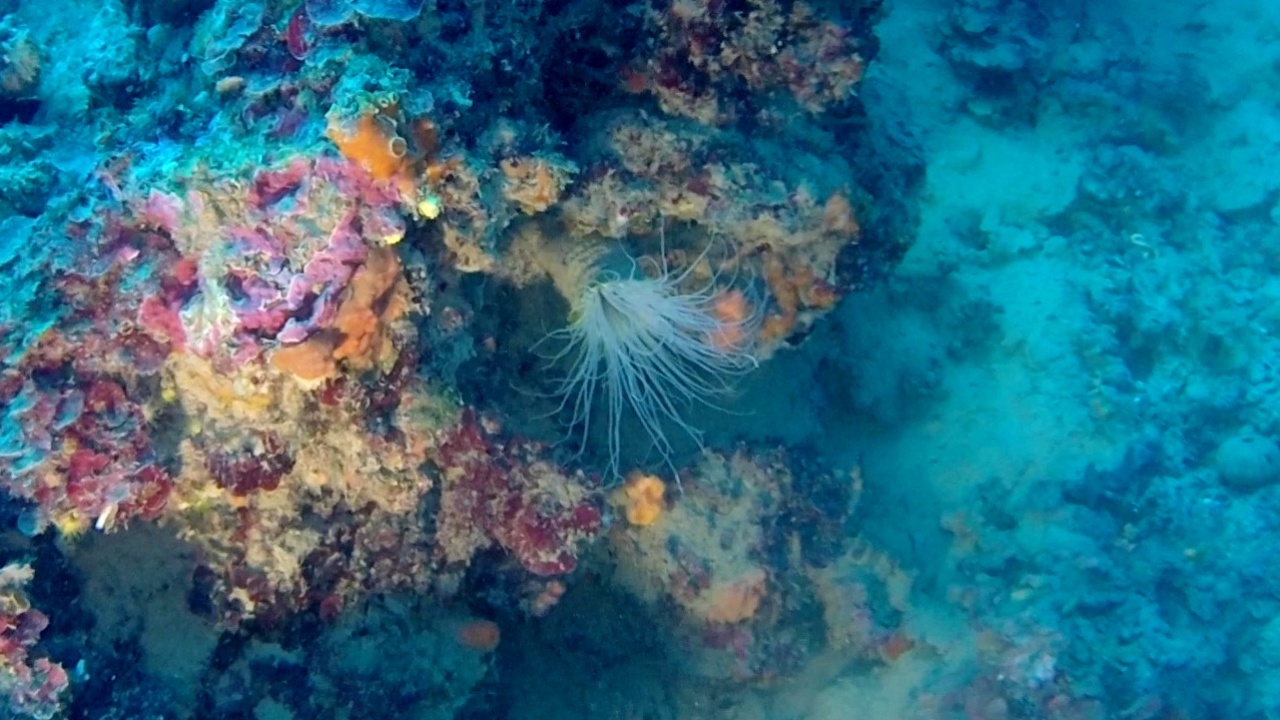
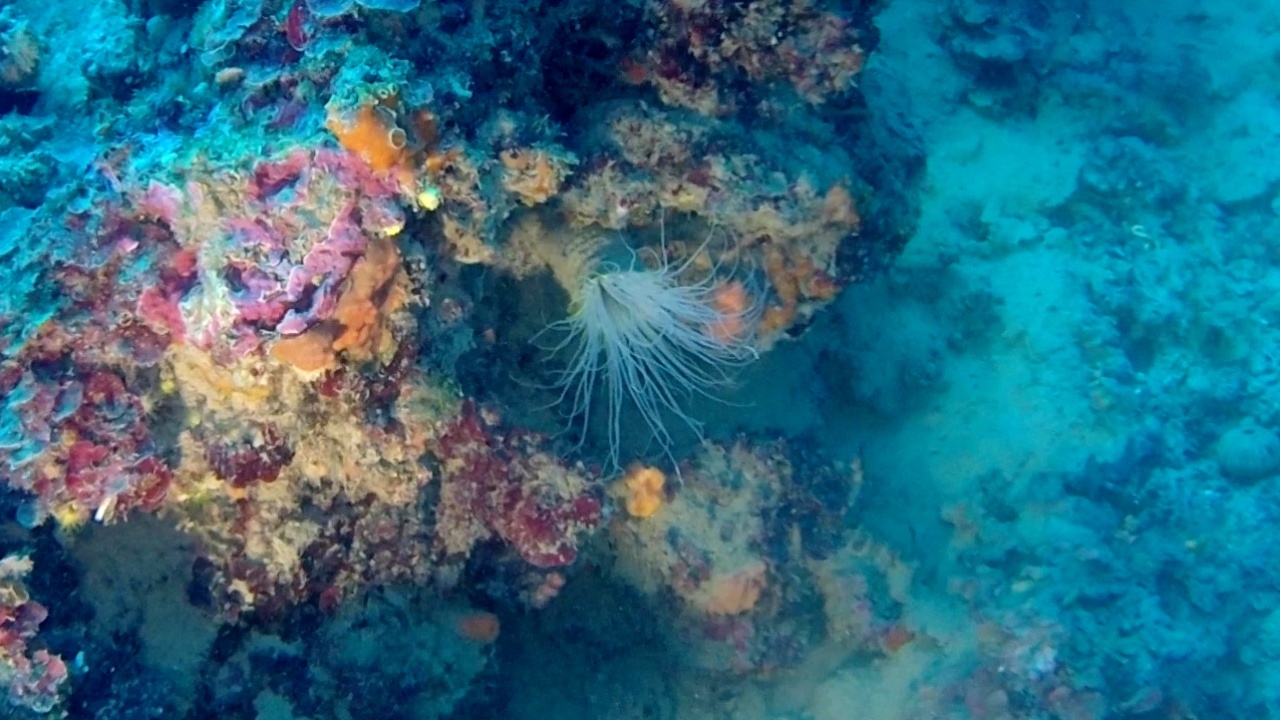
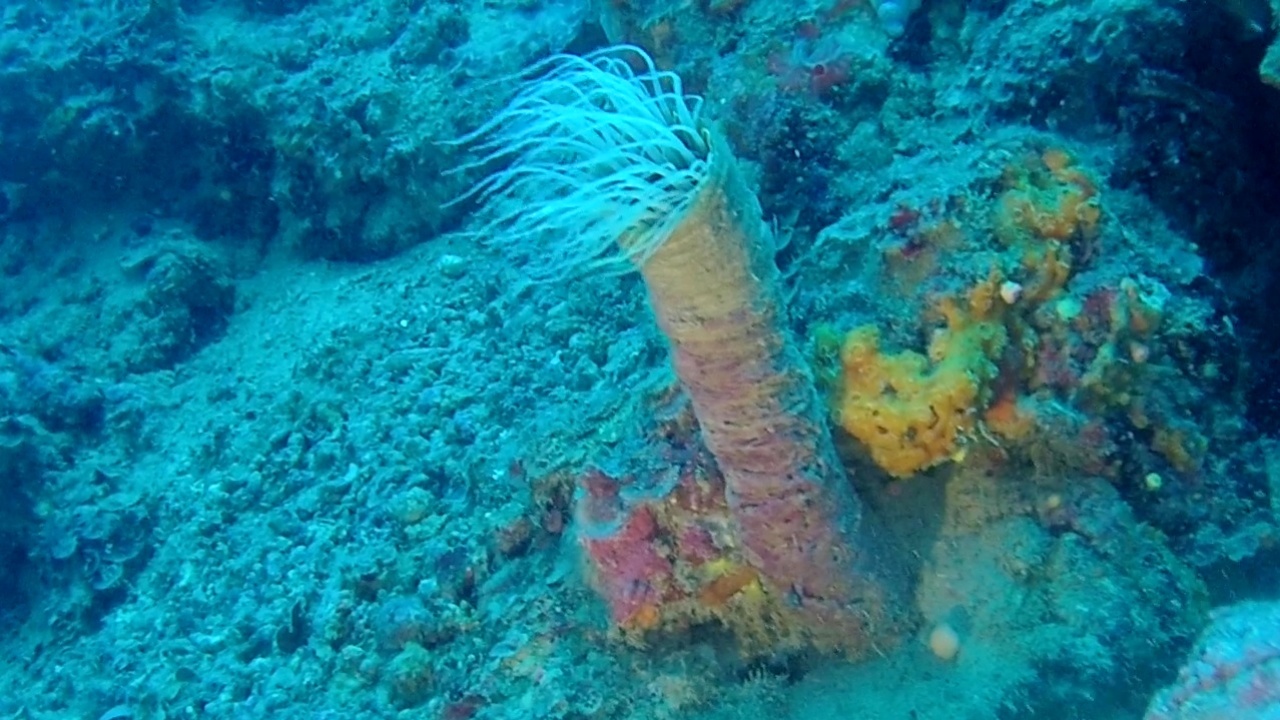
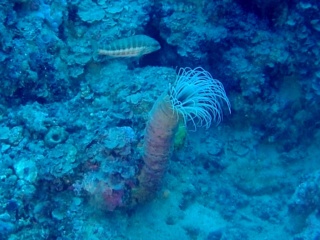
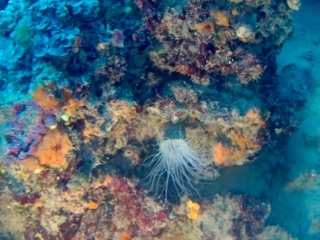
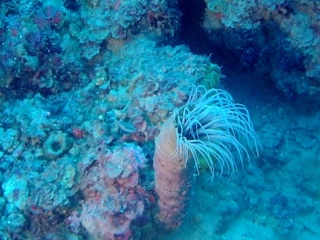
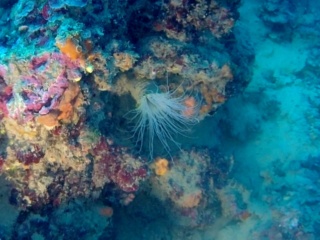
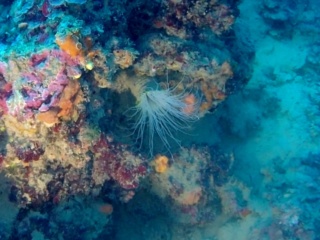
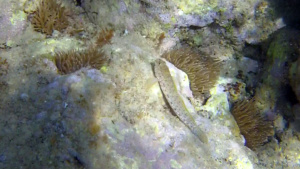
Cerianthus membranaceus, the cylinder anemone or coloured tube anemone, is aspecies of large, tube-dwelling anemone in the family Cerenthidae. It is native to the Mediterranean Sea and adjoining parts of the northeastern Atlantic Ocean.Cerianthus membranaceus anemone tubolare intotheblue.it
Cerianthus membranaceus is a large, tube-dwelling anemone. The oral disc can have a diameter of up to 40 cm. There are two whorls of tentacles, amounting to about two hundred tentacles in all. Those in the outer whorl are long and slender and armed with cnidocytes (stinging cells) and are used for catching prey. Tentacles in the inner whorl are shorter and function to transfer captured food to the central mouth. The tentacles are sometimes banded and come in an array of colours; white, yellow, orange, green, brown, blue, black, purple and violet. The colour of the inner whorl often contrasts with that of the outer whorl.
The column of this tube anemone secretes mucus in which is embedded a unique type of cnidocytes that mesh together to form a fibrous structure. Sand and other particles adhere to this and it forms a leathery, protective tube up to 40 cm. in length. There is no pedal attachment and the lower end of the tube is buried in the soft substrate. The tube is open at the base which allows for escape of water when the animal retreats into the tube.
Cerianthus membranaceus is found on the seabed in shallow water in the Mediterranean Sea and the northeastern Atlantic Ocean, its range extending as far north as Britain. Cerianthus membranaceus anemone tubolare intotheblue.it
(extract from Wikipedia)